Share Margaret Sealey Newton's obituary with others.
Invite friends and family to read the obituary and add memories.
Stay updated
We'll notify you when service details or new memories are added.
You're now following this obituary
We'll email you when there are updates.
Select your format and elements to print

IN LOVING MEMORY OF Margaret Sealey Newton
Margaret Sealey
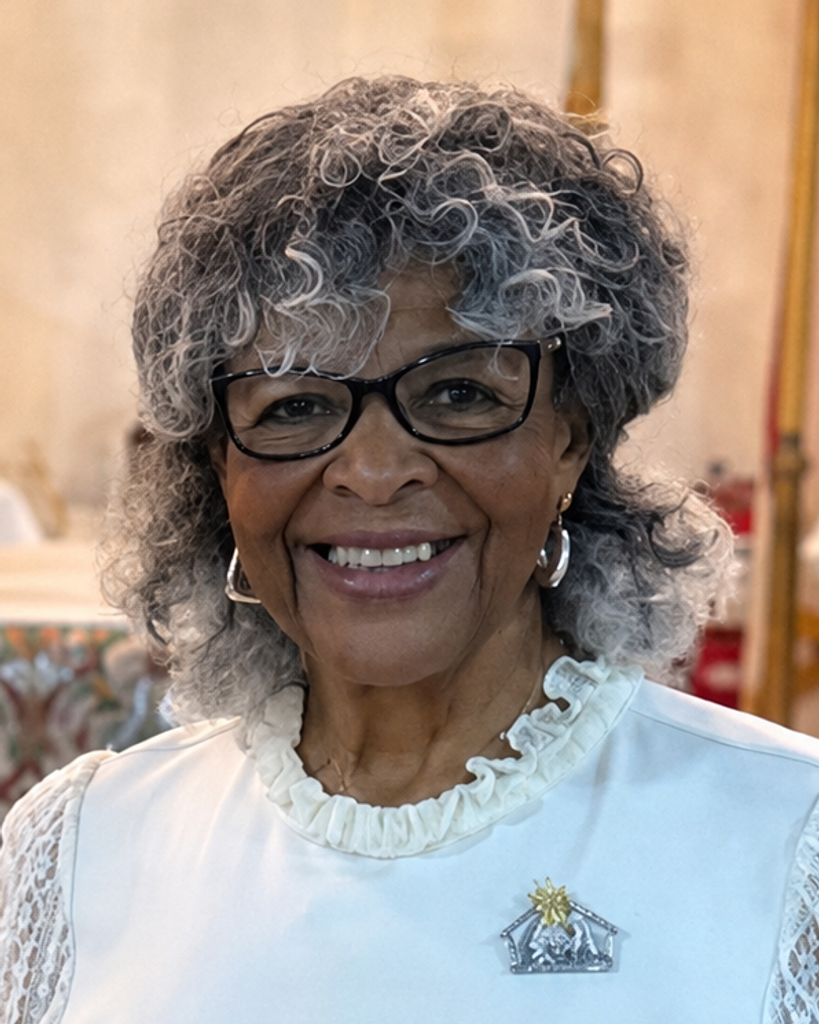
Newton
Feb 25, 1942 — Aug 27, 2026
Margaret Sealey Newton's Obituary
The Life and Legacy of Margaret Lillian Sealy Newton
February 25, 1942 – August 27, 2026
There is a difference between recording the facts of a life and accounting for what that life made possible. Margaret Lillian Sealy Newton, known throughout much of her professional life as Margaret S. Newton, was born on February 25, 1942, in Brooklyn, New York. She was the eldest of four siblings, all born in Brooklyn. Across the eighty-four years that followed, the geography of her life would expand considerably beyond the place of her birth, as would the number of people who came to know her as educator, writer, storyteller, mentor, cultural advocate, community servant, Soror, woman of faith, wife, mother, grandmother, sister, and friend.
Those titles provide useful coordinates, but no collection of titles can adequately explain a human life. Margaret's story is better found in the relationships among them: in the young woman from Brooklyn who traveled south to study education; in the college student who met the man with whom she would build a family; in the teacher who became increasingly concerned with what Black children were being taught about themselves; in the writer who helped place African and African American history within formal curriculum; in the storyteller who carried history beyond the schoolhouse; in the woman who believed culture required preservation through practice; and in the mother whose children encountered many of her deepest convictions long before they possessed language for describing them.
Beginnings and Becoming
Brooklyn gave way to Tallahassee when Margaret enrolled at Florida A&M University to pursue her undergraduate education. The choice placed her within one of the nation's historic centers of Black higher education, an institution whose significance extended beyond the conferral of degrees. For generations of African Americans, institutions such as FAMU created spaces in which intellectual formation, professional preparation, cultural consciousness, and the expectation of service could coexist. Margaret entered that tradition preparing to become an educator.
At FAMU, she also met Thomas C. Newton, another student pursuing a degree in education. Neither could have known the full architecture of the life that would follow from their meeting: more than thirty years of marriage, four children, careers shaped by education and service, a household deeply influenced by faith, and eventually a family in which education and ministry would continue into another generation. What began between two education students in Tallahassee became a partnership that would organize much of Margaret's adult life.
Margaret and Thomas married and raised four children: their eldest son, Carlton; their daughters, Ivy and Heather; and their youngest son, Bradford. Their home was not merely the private location to which their public lives returned each evening. It was itself a place of formation. Education mattered there. Faith mattered. Responsibility mattered. Culture mattered. Expectations mattered. Margaret could be demanding because she believed people were capable of being demanded of, and she did not regard compassion as requiring the suspension of standards. Her children learned that accountability and human dignity did not have to become opposing propositions.
Margaret continued her own education after FAMU, eventually earning a Master of Education degree from Florida Atlantic University. Graduate study did not depart from her work as an educator; it deepened it. The teacher remained a student, and that relationship between teaching and learning would remain visible throughout her life. Even decades later, when she possessed considerable experience and had become a source of knowledge for others, Margaret continued to understand herself as someone capable of learning.
She remained married to Thomas until he transitioned to glory. His death ended their marriage in the physical sense, but not the history they had constructed together. The children remained. The commitments remained. The family they had formed continued to carry traces of the two young education students who had once met on the campus of Florida A&M University and begun, without knowing its eventual dimensions, the work of building a life.
The Work of Her Life
Margaret's professional life would eventually span more than twenty-five years in the School District of Palm Beach County. Her service included Congress Community Middle School, Christa McAuliffe Middle School, and the Fulton-Holland Educational Services Center, the district's central administrative office. Across those years, teaching became inseparable from a question that increasingly occupied her attention: what should children know about the histories from which they came?
For Margaret, that question had particular urgency for African and African American children. The problem was not simply that Black history had sometimes been omitted from conventional schooling. Omission was only one possibility. History could also be compressed into a few familiar personalities, confined to particular months, distorted through inherited assumptions, or presented almost entirely through the history of Black suffering. Under those conditions, children might receive information about Black people without acquiring a sufficiently expansive understanding of Black life, thought, creativity, resistance, culture, achievement, and historical agency.
Margaret brought that concern into the institutional center of her profession. She served as Lead Writer for the School District of Palm Beach County's K–12 African and African American Studies Curriculum, helping develop educational resources through which teachers and students could engage histories and intellectual traditions that she believed deserved sustained presence within schooling. Her work as a curriculum writer placed her beyond the immediate reach of a single classroom. A lesson taught to one group of students might shape those students for a time; curriculum could influence what teachers taught and what students encountered across schools and generations.
Her interest in Negro folklore belonged naturally within this work. Margaret recognized that a people's history is not contained exclusively in official documents. Communities also preserve themselves through stories, language, humor, music, ritual, memory, warning, imagination, and the accumulated wisdom carried from one generation to another. Folklore preserved dimensions of Black experience that formal historical records could fail to capture precisely because the people who created those records had not always regarded Black knowledge as equally worthy of preservation.
Margaret did.
That conviction followed her beyond the school district. Retirement could conclude an employment relationship; it could not retire the questions to which she had devoted herself.
As Founder and President of the Sankofa Study Group, Inc., Margaret helped create an African-centered community of inquiry concerned with African and African American history, culture, and intellectual life. The concept of Sankofa was particularly suited to her work because it refuses the assumption that progress requires forgetting. Sometimes, moving forward requires retrieval—when something neglected must be recovered because its absence impoverishes what can be constructed next.
Her work with Sankofa Securities, Inc., where she served as Vice President, extended those concerns into questions of economic knowledge and collective advancement. Historical consciousness and material consciousness occupied different domains, but they shared a concern with what communities understood, what resources they possessed, and what one generation might make available to another.
Margaret's classroom had grown considerably.
Beyond the Classroom
For at least a decade, one place where that enlarged classroom became visible was the Spady Cultural Heritage Museum in Delray Beach. Margaret volunteered with the museum in its work of preserving and interpreting the Black history of Palm Beach County, and in 2017 her service received public recognition when she was profiled as an "Unsung Hero." The designation was fitting precisely because much of the work to which Margaret committed herself depended upon people willing to labor without requiring public recognition as the condition of their service.
At Spady, Margaret became especially known for storytelling during Juneteenth commemorations. Working with community musicians and singers, she helped bring historical narrative into conversation with verse and music. The method mattered. History could be factually available and remain emotionally or culturally distant. A date might be memorized without its human meaning being apprehended; an event might appear in a textbook while the people who experienced it remained strangely absent. Storytelling allowed Margaret to place human beings back inside the history.
One Juneteenth experience remained especially meaningful to her. While telling the story of an elderly Black woman who had learned that she was free, Margaret noticed older women and men in the audience wiping tears from their eyes. Her attention did not end there. She wondered whether those moved by what they heard might carry that experience home and tell their children and grandchildren. The moment reveals much about how Margaret understood learning. Knowledge had not completed its work merely because it had been communicated accurately. Its deeper consequence appeared when someone who received it decided that another person ought to receive it too.
Her sustained commitment to Kwanzaa reflected the same understanding. In collaboration with the Spady Cultural Heritage Museum, Pyramid Books, Zeta Phi Beta Sorority, Incorporated, and others, Margaret helped maintain a community Kwanzaa commemoration for years, including periods when the observance was less culturally fashionable or less widely understood. Popularity did not determine for Margaret whether a cultural practice deserved preservation. Traditions survive because people decide they remain worth practicing, explaining, and transmitting.
Among the Kwanzaa images that mattered most to her was that of children lighting the kinara. What she saw in that moment was more than children's participation in a ceremony. She saw young people being located within a history. They were being reminded that they had predecessors; that those predecessors had thought and built, created and resisted, worshiped and loved, suffered and survived; and that their own lives stood upon human shoulders they might never personally know.
Margaret wanted Black children to possess pride in who they were, but hers was not pride detached from knowledge. Pride without historical consciousness could become affirmation without foundation. She wanted children to know enough about those who came before them to understand that they had inherited something, because only then could they begin confronting the question of what they might owe those who would come after them.
Her commitments to history, education, and cultural life existed alongside an equally sustained commitment to service. Margaret gave of herself through the Guardian ad Litem Foundation, the Literacy Council of Palm Beach County, Healthier Boynton Beach, and the Boynton Beach Mental Health Committee. She shared in the musical life through the Delray Community Choir. These were not necessarily extensions of a single program or organization; they reflected a woman whose conception of community was broad enough to include children, literacy, health, culture, history, and human well-being.
For Margaret, community was not merely a place one inhabited. It imposed claims upon those who belonged to it. There were children to teach, neighbors to assist, histories to preserve, organizations to strengthen, and needs that did not cease to exist because they fell outside one's professional job description. She belonged to a generation for whom service could be understood less as a public identity than as an ordinary obligation of adulthood—much of the work needed to be done.
Her more than four decades in Zeta Phi Beta Sorority, Incorporated, gave that commitment another institutional home. Initiated into Delta Epsilon Zeta Chapter on January 4, 1980, Margaret would later become a Charter Member and past President of Omicron Delta Zeta Chapter and serve in multiple capacities throughout her tenure. Zeta provided sisterhood, certainly, but Margaret's long association with the Sorority also reflected her characteristic willingness to assume responsibility within institutions rather than merely belong to them.
That history acquired another dimension when her daughter Ivy became a member of Zeta Phi Beta. A commitment Margaret entered in 1980 thereby became part of the inheritance of another generation. No grand declaration was required. The continuity itself said enough.
Faith likewise remained present throughout Margaret's life. She was an active member of St. Matthew's Episcopal Church in Delray Beach and participated in the Episcopal Church Women. Her marriage to Rev. Deacon Thomas Newton had placed Christian vocation near the center of family life; however, Margaret's faith cannot be adequately understood as something confined to Sunday worship or ecclesiastical membership. The woman who taught, mentored, advocated, volunteered, preserved history, supported children, served community organizations, sang, and remained available to the needs of others did not inhabit separate moral worlds depending upon which institution she entered. Faith and service met in practice.
This is why the apparent diversity of Margaret's commitments becomes less surprising when her life is viewed as a whole. School district, museum, church, Sorority, Sankofa, literacy work, children's advocacy, mental health, community health, music, storytelling, curriculum, Kwanzaa, and Juneteenth appear on paper as separate affiliations. Margaret supplied the connection among them. She kept returning to human beings and to the conditions under which they might know more, remember more, become more, and leave more available to those who followed.
The Woman Her Family Knew
Public lives inevitably produce public descriptions. Margaret S. Newton can accurately be described as an educator, writer, curriculum developer, storyteller, cultural advocate, community servant, Soror, churchwoman, founder, president, mentor, and volunteer. Those descriptions matter because they establish the breadth of her work. They remain incomplete because none captures the relationship her children knew her first.
She was their mother.
Carlton, Ivy, Heather, and Bradford encountered Margaret away from the public recognition, institutional titles, organizational meetings, curricula, commemorations, and community programs through which others came to know her. They knew the ordinary repetitions of family life: expectations voiced more than once, standards enforced when enforcement was inconvenient, lessons whose significance might not become apparent until years later, and the innumerable acts through which a parent shapes children without knowing which particular moments they will eventually remember.
Margaret was proud of her children and grandchildren, but pride did not prevent expectation. She could challenge because she believed capacity carried responsibility. Her children were not taught that love meant exemption from accountability; neither were they taught that failure canceled belonging. Those distinctions matter because they would reappear, in different forms, in the adult lives her children constructed.
For Carlton, the continuity became particularly visible in education and ministry. His later refusal to accept that children should be institutionally discarded because they are difficult to teach, difficult to understand, or inconvenient to conventional systems did not emerge from scholarship alone. Neither did his conviction that authority creates obligations toward those entrusted to it. Long before those commitments could be theorized, defended, or institutionalized, he had encountered their earliest form at home.
The same is true of the larger inheritance Margaret left among her family. Influence does not require children to reproduce their parents. Its more consequential form may be found when children carry forward principles while giving them expression their parents could never have predicted. A mother's work then becomes visible not through imitation but through continuation.
What Remains
Margaret is survived by her children, Carlton, Ivy, and Bradford; her sisters, Daisy and Diane; and her grandchildren, Nika, Deja, and Brianna. A host also remembers her grandnieces and grandnephews, cousins, extended family members, former students, colleagues, neighbors, Sorors, fellow parishioners, friends, and loved ones whose lives intersected with hers across more than eight decades. Their names properly belong within the record of her life, but a list of survivors can establish only who remains after someone dies. It cannot tell us what remains because that person lived.
The answer to that second question is distributed across lives Margaret may never have fully known she changed. It resides in former students and colleagues, in teachers who encountered curriculum she helped shape, in people who learned Black history through her storytelling, in families who gathered for Kwanzaa, in children who watched a kinara being lit, in audiences who encountered Juneteenth not merely as historical information but as human experience, in Sorors with whom she served, in parishioners beside whom she worshiped, in organizations strengthened by her labor, and in children and grandchildren who continue carrying portions of an inheritance whose full dimensions may reveal themselves only with time.
The most meaningful memorial to an educator is therefore not simply that former students remember her name. It is that something placed within them continues to operate after she is gone: someone teaches differently because she taught them; someone gives another child an opportunity because she once gave one; someone preserves a history because she insisted it mattered; someone tells a child a story because Margaret demonstrated that stories can carry what official records sometimes cannot; someone refuses to allow a cultural inheritance to disappear merely because preserving it has become inconvenient. Perhaps somewhere an elder still tells a child something Margaret once caused that elder to remember. At that moment, the work has traveled farther than its original teacher ever could.
Years ago, Margaret used an unusual phrase when speaking about the work of knowledge. She referred to the "agile light of knowledge." The words now seem almost biographical. Across eighty-four years, that light moved through her life—from Brooklyn to Florida A&M University, where education and love converged; from FAMU into marriage and family; from graduate study at Florida Atlantic University into classrooms and professional leadership; from schools into curriculum; from curriculum into cultural advocacy; from books into stories; from the Spady Museum into Juneteenth; from historical recovery into Sankofa; from Kwanzaa into the hands of children lighting a kinara; from sisterhood into another generation; from faith into service; and from mother into child.
Seen from that vantage point, Margaret's life does not yield easily to the ordinary language of accomplishment. Accomplishments belong to the person who achieves them. Much of Margaret's work was deliberately placed beyond herself. She taught so that someone else might know. She wrote so that someone else might teach. She told stories so that someone else might remember. She preserved traditions so that children might inherit them. She served institutions so that communities might possess them. She raised children without knowing all the places into which something learned at home might eventually travel.
That is the distinction between memory and legacy. Memory asks us to preserve what Margaret did; legacy requires us to notice that what Margaret did has not stopped happening. Her death on August 27, 2026, establishes the boundary of her physical life, but it cannot establish the boundary of her consequence. Eighty-four years can be measured between two dates. What those years placed into other human beings cannot be measured so neatly.
My mother has died, and our family must now learn the difficult difference between loving someone in her presence and loving her through memory. Nevertheless, even grief cannot make the final claim upon a life whose work was so frequently directed toward what came next. The histories she carried remain available to be told. The standards by which she lived remain available to be practiced. The children she formed are themselves forming others. The knowledge she transmitted has already traveled beyond the reach of the woman who first set some portion of it in motion.
Perhaps that is where Margaret's life story should leave us: not simply at the fact that a light has gone out, but with the recognition that she spent eighty-four years placing light elsewhere.
The light is still moving.
Funeral Services for Margaret Sealey Newton
Viewing

Friday
St Matthews Episcopal Church
6:00 - 8:00 pm (Eastern time)
Funeral Service
Saturday
St Matthews Episcopal Church
Starts at 10:00 am (Eastern time)
Margaret Sealey Newton's Guestbook

Visits: 102
This site is protected by reCAPTCHA and the
Google Privacy Policy and Terms of Service apply.
Service map data © OpenStreetMap contributors